
Why does food stick to a blue steel pan? Understanding why food sticks to a blue steel pan is the first step to fixing it. The blue steel pan sticking problem is one of the most common frustrations people run into when they first switch to this type of cookware. The short answer is that it’s rarely the pan’s fault — and once you understand why it happens, it’s straightforward to fix.
Why Food Sticks to a Blue Steel Pan — The Real Reasons
There are five main reasons for the carbon steel pan sticking problem, and they’re worth understanding separately.
1. The seasoning isn’t there yet
This is the most common reason, and it’s also the most misunderstood. Seasoning a blue steel pan isn’t a one-time task — it’s a process that builds up gradually over multiple cooks. The first time you use the pan, the surface isn’t ready to perform like a well-seasoned pan yet. That takes time, oil, and heat, repeated across several cooking sessions.
A lot of people season the pan once, cook something, find it sticks, and assume the pan is the problem. It’s not. It just needs more time.
Fix: Keep cooking with it. One of the most common misunderstandings about why food sticks to a blue steel pan is that people expect instant results. Start with oil-friendly foods like seared meat or sautéed vegetables — these help build the seasoning without the pressure of a perfect result. The more you cook, the better the surface gets.
2. The pan isn’t hot enough
Temperature is actually one of the main reasons why food sticks to a blue steel pan — and one of the easiest to fix once you know about it. A blue steel pan needs to be properly preheated before anything goes in. The right approach is hot pan, then oil — not oil in a cold pan. When the pan is at the right temperature, the oil spreads evenly and creates a barrier between the food and the surface. When it’s not hot enough, the food makes direct contact with the metal and bonds to it.
This is one of the biggest adjustments for people coming from nonstick, where temperature matters much less.
Fix: Preheat the pan over medium heat for 1–2 minutes before adding oil. The oil should shimmer and move freely as soon as it hits the surface — that’s the sign the pan is ready to cook.
3. Cooking delicate foods too early
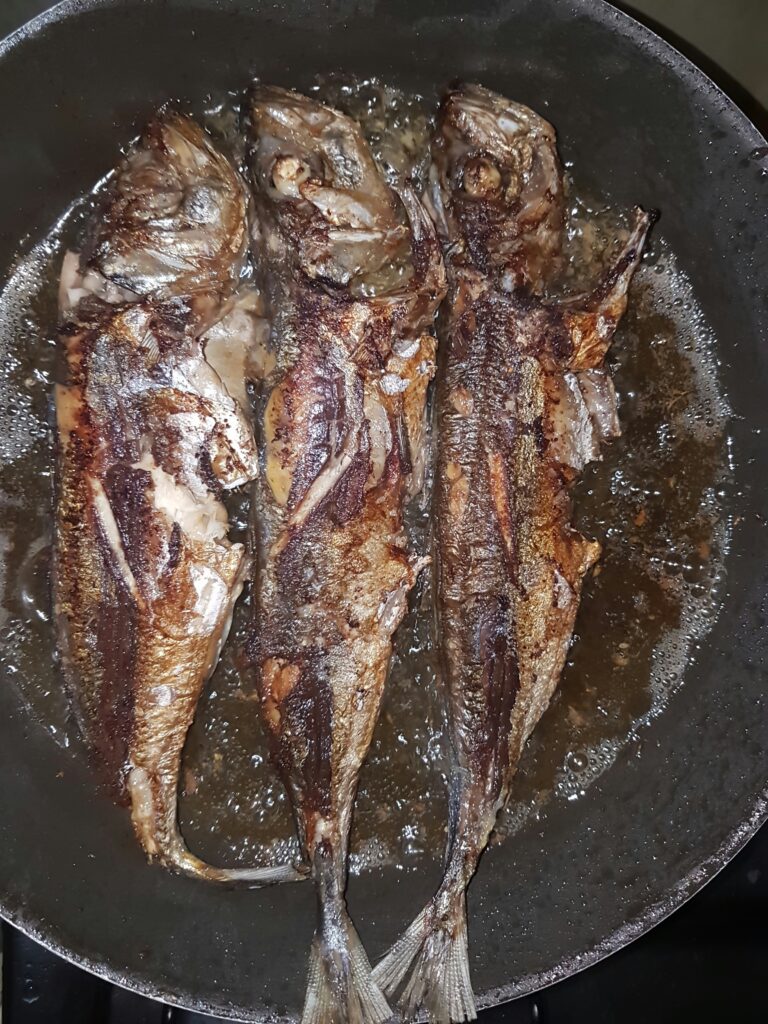
Eggs and fish are the classic examples of why food sticks to a blue steel pan in the early stages. These are low-fat, delicate proteins that stick easily — even on a well-seasoned pan — if the seasoning layer isn’t fully developed yet. Cooking them in the first few sessions is a recipe for frustration.
Fix: Save eggs and fish for after the pan has had a few weeks of regular use. In the early stages, stick to foods that are more forgiving — searing meat, sautéing vegetables, anything with plenty of fat. These build the seasoning while being much less likely to stick.
4. Not enough oil
In the early stages — before the seasoning is fully built up — oil plays an important role in bridging the gap. Without enough oil, food makes direct contact with the metal surface and sticks. This is especially noticeable with leaner ingredients like chicken breast or vegetables. A reasonable amount of oil while the seasoning is still developing isn’t optional; it’s part of how the pan works at this stage.
Fix: Use enough oil to coat the surface before adding food. As the seasoning matures, you’ll naturally find you need less — but in the early stages, don’t be too conservative with it.
5. Flipping too soon
When you place meat in the pan, it will initially stick to the surface — that’s normal. As the sear develops, the meat naturally releases on its own. If you try to flip it too early, before that crust has formed, you’ll tear the surface and it will stick. The rule is simple: if it doesn’t release easily, it’s not ready to flip yet. Give it more time.
Fix: Be patient. Once a proper sear has developed, the meat will release cleanly on its own. If you feel resistance when you try to lift it, leave it for another 30–60 seconds and try again.
What Most People Don’t Realize
A blue steel pan doesn’t behave like a nonstick pan — and expecting it to is where most of the frustration comes from.
A nonstick pan is ready to use from day one. You add a little oil, cook your eggs, and nothing sticks. A blue steel pan works on a completely different principle. The nonstick properties aren’t built into the coating — they develop through use. The more you cook with it, the better the surface gets.
This also means that blue steel pan vs nonstick isn’t really a fair comparison in the first week. A new blue steel pan is always going to feel less forgiving than a nonstick straight out of the box. But six months in, the dynamic shifts — the blue steel pan keeps improving while the nonstick starts to decline.
Understanding this from the start makes the first few sessions much less frustrating. And it’s the key to understanding why food sticks to a blue steel pan in those early weeks — it’s not a defect, it’s just a pan that hasn’t been broken in yet.
How to Season a Blue Steel Pan — And How to Tell It’s Working
Learning how to season a blue steel pan properly is the single most important thing you can do to prevent sticking long term.
The process is simple: wash the pan once with warm water to remove any factory residue, dry it completely, apply a very thin layer of neutral oil — just enough to coat the surface, then wipe off the excess — and heat it over medium-high until it starts to smoke. Let it cool and repeat two or three times. That’s your starting point.
From there, the seasoning continues to build naturally every time you cook with oil.
How to tell if it’s ready:
- The surface color deepens from blue-grey to dark brown, eventually close to black
- The surface develops a subtle gloss — a well-seasoned pan has a slight sheen to it
- The egg test: fry an egg with a small amount of oil. If it slides around without sticking, the seasoning is in good shape
One thing to keep in mind: don’t judge the pan after one session. The seasoning compounds with every cook, and the pan that feels awkward in week one is often the pan you reach for every day by month two.
Daily Care — How to Keep a Blue Steel Pan Nonstick
Good carbon steel pan care comes down to a few consistent habits. Done right, these habits also directly reduce the chances of food sticking to a blue steel pan over time.
Use it regularly. This is the most important one. A blue steel pan gets better the more it’s used. Leaving it unused for weeks at a time slows down the seasoning process and increases the chance of rust developing. It’s a pan that rewards regular cooking.
Warm water only. After cooking, rinse with warm water and a soft brush. No harsh detergents — they strip the seasoning layer and set you back. If something is stuck, a bit of coarse salt and a paper towel works well.
Dry it completely. Don’t leave water sitting in the pan. Dry with a cloth, then put it back on low heat for a minute to make sure there’s no moisture left.
Apply a light coat of oil after washing. While the pan is still warm, wipe the surface with a small amount of oil. This protects the seasoning between uses.
Avoid boiling water in it. Prolonged water contact breaks down the seasoning layer. This is a pan for cooking with oil — save the boiling for a different pot.
What damages blue steel pan maintenance:
- Strong dish soap or detergent
- Soaking in water
- Cooking acidic foods for extended periods — tomato sauces, citrus, wine reductions
- Boiling water
None of these cause permanent damage, but they can strip the seasoning and cause the carbon steel pan sticking problem to return. If that happens, a round of re-seasoning fixes it.
Final Thoughts
A blue steel pan asks a little more from you upfront — but food sticking is almost always one of the five reasons above, and every one of them is fixable. Take care of the seasoning, use enough oil in the early stages, and the pan gets better with every cook.
Part of our blue steel pan guide: