
Here’s a straightforward look at what it is, how it works, and what you can do with it.
What Is a Blue Steel Pan?
A blue steel pan starts as carbon steel — but it goes through a heat treatment process that changes the surface at a material level. The high heat causes the steel to form a dense oxide layer, which makes it significantly more rust-resistant and corrosion-resistant than standard carbon steel. It’s not a coating that gets applied on top; it’s a structural change to the surface itself.
The “blue” part? That’s what you actually see after the pan has been seasoned. Once the oxide layer develops, the surface takes on a distinctive blue-grey tone — which is where the name comes from. It’s a sign that the pan has been properly prepared and is ready to use.
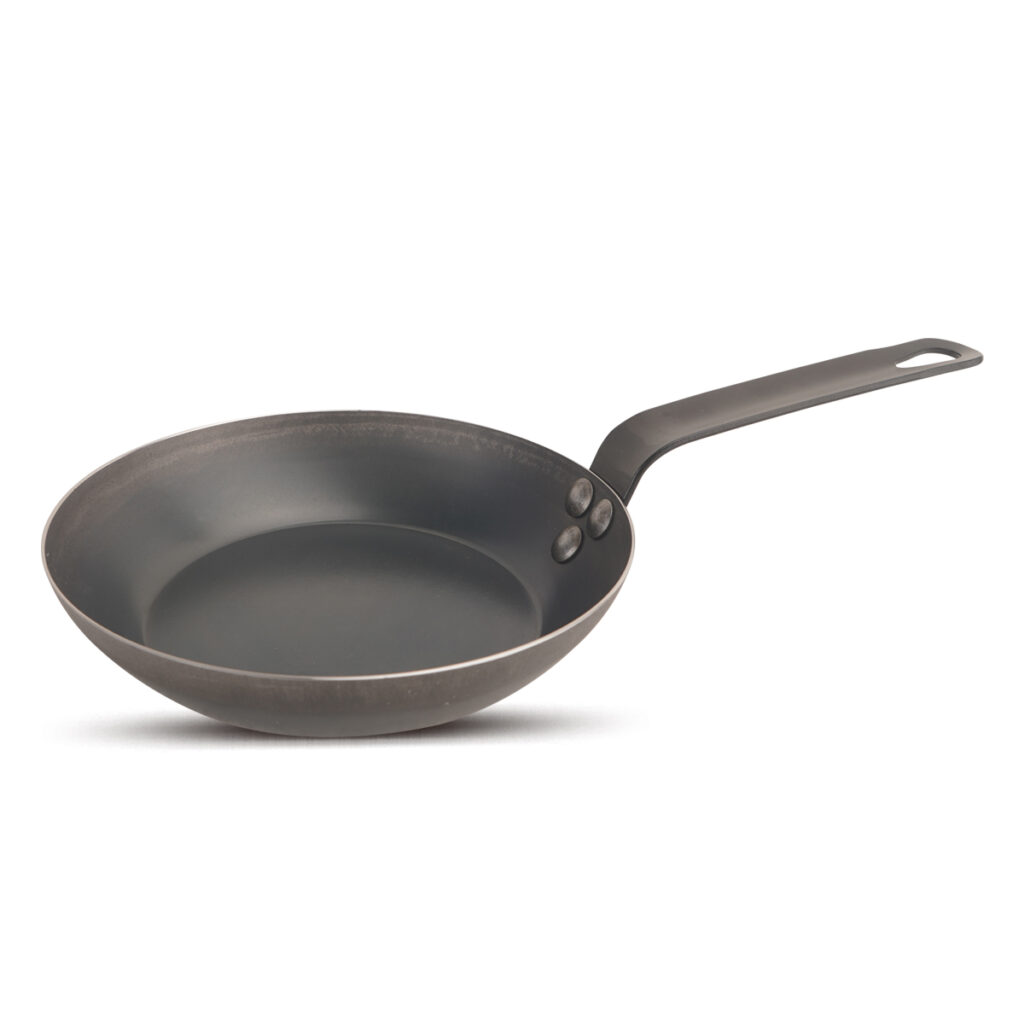
How It’s Different from Other Pans
The easiest way to think about a blue steel skillet is that it sits right between cast iron and stainless steel. It’s tougher than nonstick, lighter than cast iron, and more forgiving than stainless.
- vs. cast iron — A carbon steel pan heats up faster and is noticeably lighter, which makes it easier to move around the kitchen. It also responds to temperature changes more quickly, so you have more control.
- vs. nonstick — Most nonstick pans rely on a coating that wears down over time and eventually needs replacing. A blue carbon steel pan has no coating at all — the nonstick properties come from the oxide layer and the seasoning you build up through use. That’s why it lasts significantly longer, and there’s nothing on the surface to peel or degrade.
- vs. stainless steel — Carbon steel heats up faster than stainless, which gives you more control during cooking. And once it’s been properly seasoned, the surface is noticeably more nonstick than stainless — food releases more easily with less oil.
What a deeper comparison? We break down blue steel pan vs non stick in separate guides.
How It Performs in Real Cooking
Here’s the honest part — a carbon steel pan doesn’t perform like magic straight out of the box. You need to season it first, and the first few uses can feel a little uneven. Food might stick more than you expected, and that’s part of the process.
But once you’ve cooked with it a handful of times, the seasoning builds up and the surface gets progressively more nonstick. It holds heat well, develops a good sear, and handles high-heat cooking reliably. It also goes straight from stovetop to oven, which is a genuinely useful feature in everyday cooking.
More on how to get the best out of it in our seasoning and care guide.
What You Can Cook
A blue steel skillet is surprisingly versatile. It’s not just a “steak pan,” even though it does an excellent job with that.
Some things it genuinely excels at:
- Searing and oven-finishing meat — sear your steak, chicken thighs, or pork chops on the stovetop to get a proper crust, then transfer the pan straight into the oven to finish cooking. No extra dishes, and the result is noticeably better than doing one or the other alone.
- Eggs — once the pan is well seasoned, it handles fried and scrambled eggs with ease.
- Vegetables — mushrooms, peppers, Brussels sprouts — anything that benefits from direct high heat and a bit of colour.
One thing to keep in mind: avoid cooking highly acidic foods like tomato sauce or wine-based dishes in it for long periods. Acid can strip the seasoning.
Final Thoughts
A blue steel pan isn’t for everyone — it does ask a bit more from you than a nonstick. But if you’re willing to put in a little care upfront, it pays you back with years of reliable, high-performance cooking. It’s the kind of pan that actually gets better the more you use it.
If you’re tired of replacing nonstick pans every couple of years and want something that’ll last, a blue carbon steel pan is genuinely worth considering.
This is part of our full guide to blue steel cookware. Explore the rest of the series: